Un proyecto de


A project of


Our Community


Planet Earth or planet water?
Groundwater, an invisible mantle that connects life
Planet Water
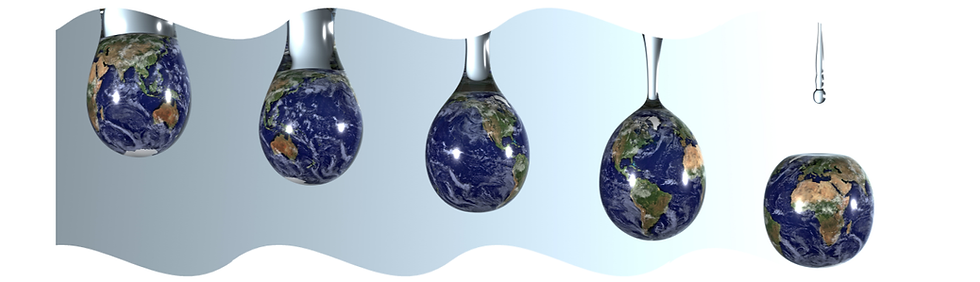
It's curious that we call our planet "Earth" when it's mostly covered in water. All life as we know it revolves around this liquid, and yet, as a resource, it's severely threatened.
The main reasons why water in general is endangered are due to its pollution and scarcity. On the one hand, pollution can result from the excessive use of agrochemicals, wastewater discharges, high concentrations of microplastics, oil or other fuel spills, acidification from increased carbon dioxide in the atmosphere, eutrophication, and other factors. On the other hand, physical water scarcity, also known as water stress, occurs mostly when a body of water—whether surface or, more commonly, groundwater—is overexploited to such an extent that its recharge or recovery time cannot keep pace with the amount of water extracted. Consequently, there are geographical areas of the planet that no longer have access to this resource; Mexico, for example, is facing an imminent water crisis.
More generally, today, water stress is a consequence of climate change, which causes glacial retreat (and subsequent contamination with salt water), as well as the evaporation of surface waters.
To put the seriousness of the above into context, we must mention that Earth's water is distributed as saltwater (97%) and freshwater (3%), with freshwater being almost all the water we consume and use. Of that percentage of freshwater, most is in a solid state, forming polar ice caps and glaciers (69%), while the rest is in liquid form, as surface water (0.5%), mainly forming rivers and lakes, and the remainder (30%) as groundwater (WWAP, 2009). It's important to remember that all values are approximations.
Groundwater can be stored in various ways underground, ranging from occupying the available spaces in rock pores to being found in larger formations known as aquifers. Aquifers are the most important and readily available source of freshwater for humanity, as it is estimated that 70% of the water we use comes from an aquifer. Even more significantly, around 40% of that same water is used directly for agriculture and irrigation ( ibid .). These freshwater supplies are not only essential for human existence but also play an indispensable role in ecosystems. Groundwater nourishes the arid and semi-arid regions of the world, where precipitation is insufficient to meet the needs of vegetation and the organisms that depend on it. It also maintains the level of surface water bodies and provides them with a constant flow that allows for the distribution of nutrients and prevents stagnation. On the other hand, groundwater is an essential link in the water cycle, even though it may not seem so due to its "invisible" condition to the human eye.
The main problem jeopardizing our largest source of freshwater is contamination. Contamination of an underground water body can become chaotic due to the distance it travels underground and the permeability of the rocks it interacts with. For example, an agricultural field heavily treated with pesticides can contaminate the entire aquifer because rainwater facilitates the infiltration of contaminated surface water into the (clean) subsoil. This scenario is unfortunately more common than we imagine, and it occurs with any contaminant found in the soil that is water-soluble and permeable to rocks. The second problem, which we will explore further with a case study—and a hopeful example—is overexploitation. Overexploitation of an aquifer occurs when we extract a volume of water greater than what is naturally recharged or infiltrated.
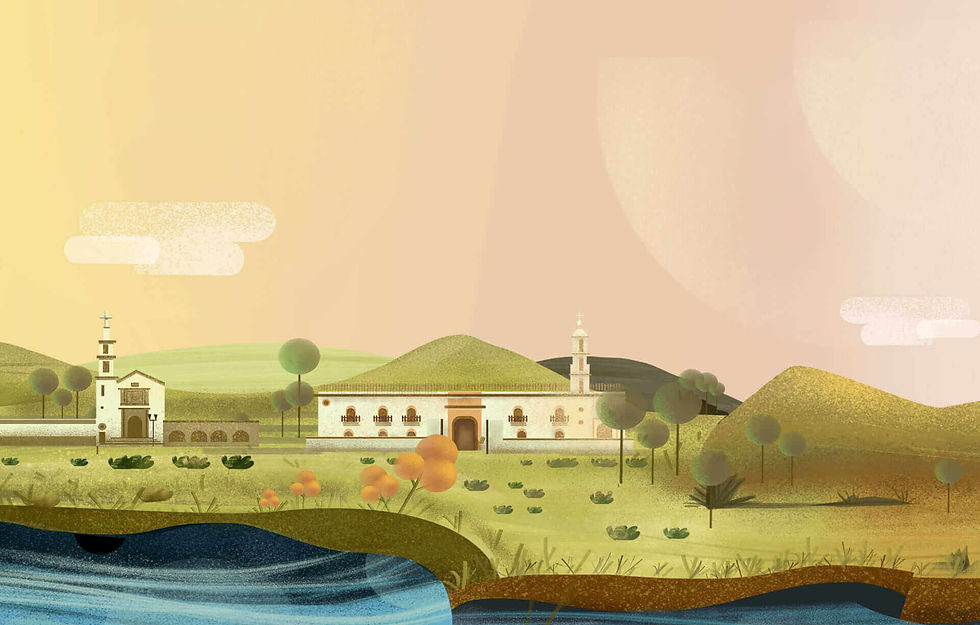
To further understand the above, we can look at Figure 1, which illustrates a portion of the water cycle by highlighting the management and conservation actions of the Apan aquifer in Hidalgo. When rain falls on the ground, it usually infiltrates (although some factors impede infiltration, such as water erosion—which we will discuss later—soil compaction, and salinization, among others). Once the water is absorbed by the soil, it slowly permeates through the parent rock and eventually settles in the aquifer. Infiltration is a relatively rapid process; aquifer recharge, on the other hand, is a slow process that involves the accumulation of infiltrated water until a certain volume is reached.

Figure 1. Water restoration in the Apan Valley, Hidalgo. Infographic prepared by Sofía Aguilar for Toroto within the framework of the Aguas Firmes program.
Water as a resource faces very adverse situations, mostly of human origin; however, efforts to protect it are numerous and widespread. We celebrate World Water Day because water is life. Water is food for everyone; the driving force behind the immense vegetation that inhabits it; home to the vast majority of organisms that live on Earth; an indispensable resource for carrying out—in one way or another—all the productive activities we undertake. Water is our right, and for this reason, since 1992, within the framework of the United Nations Conference on Environment and Development held in Rio de Janeiro, March 22nd has been declared World Water Day.
By caring for water, we protect the soil: management and conservation activities of the Apan aquifer, Hidalgo
Alejandro León Aguilar
After careful and thorough planning, during 2020 and 2021, Toroto – as an implementing partner of the Aguas Firmes program , operated and financed by Grupo Modelo and the German Cooperation for Sustainable Development (GIZ) GmbH – intervened on several hundred hectares of land in Apan, Hidalgo, with the intention of increasing water infiltration in the important aquifer that this valley houses.
The aquifer management and conservation activities, whose main objective is to promote water infiltration, were carried out over the last two years and focused on the following: the reforestation of more than 235 hectares to restore ecosystem functions; the establishment of more than 45 kilometers of living barriers with native plants, such as species from the genera Agave , Opuntia , Pinus , and Quercus ; the construction of more than 10 kilometers of contour stone barriers and 12 gabion dams; and the dredging of three main water bodies: La Laguna, Los Llorones, and La Vega, where a total of more than 12,000 cubic meters of sediment were removed. In addition, Toroto, in collaboration with Grupo Modelo, has conducted several workshops for landowners to share best agricultural practices, as well as other useful information on sustainability and conservation; in this way, we seek to create close ties that allow for long-term management. All these activities aim to infiltrate an additional 1.8 hm3—that is, 1.8 billion liters—of water into the aquifer, helping it maintain a healthy balance: when aquifers are healthy, the amount of water we extract is proportional to the amount that infiltrates, so they are never overexploited. However, promoting infiltration is not a simple task, but it brings significant benefits.
As is often the case with interventions like the one mentioned above, the impacts and benefits are rarely one-dimensional. So, what other advantages do these nature conservation activities bring to the environment?
One of these is the prevention of soil erosion. Water erosion occurs when the force of rainfall and the energy of subsequent runoff tear away the topsoil. The particles generated by this friction are then carried by the current to other locations, which can affect canals, bodies of water, and human infrastructure. This type of erosion is the most prevalent in Mexico and is also the most common in Apan, as it is easily exacerbated by human activities. Water erosion has serious consequences for ecosystem dynamics, but above all, it affects nearby populations. When soil erodes, it loses the surface layer where much of the organic matter and microorganisms that give it fertility are found, becoming an almost inert substrate that is largely unsuitable for agriculture, among other activities. On the other hand, the eroded soil becomes sediment that, through the action of air and water, ends up accumulating somewhere else, generating – in the worst cases – floods and siltation.
Another consequence relates to aquifers. Because water erosion occurs between the water and the upper layer of the substrate, the latter prevents the water from infiltrating and, therefore, from recharging the aquifer. On the other hand, when the amount of water that seeps into the lower soil layers—such as the subsoil and parent rock—increases, the water infiltrates , thus reducing the amount of runoff and consequently decreasing erosion. Therefore, activities that promote water infiltration (such as all the aquifer management actions mentioned above) have a direct impact on the amount of sediment generated, since promoting infiltration prevents erosion. This is how we reduce the amount of soil affected by water erosion.
How closely related are these two processes? To estimate the impact of water infiltration activities on soil erosion, we first assessed the current state of the soil resource in the valley. The Ministry of Environment and Natural Resources (SEMARNAT) (2013) and Bolaños et al . (2016) have published reports on soil erosion at the national level. In these documents, erosion in Apan is considered to be between moderate and extreme. Furthermore, Bolaños et al. (2016) report that at least 70% of the landscape in Hidalgo is affected by water erosion , while SEMARNAT (2013) states that erosion generates 10 to 200 t/ha/year of sediment, depending on the severity of the degradation.
To corroborate the information published by SEMARNAT (2013) and Bolaños et al. (2016) on soil erosion, Toroto, in addition to supporting Grupo Modelo's projects, conducted an assessment of this resource. Using data from government sources, field data collection, and specialized software, we determined that an average of 152 t/ha/year of sediment is produced in Apan, which is consistent with the values mentioned above, as reported by SEMARNAT (2013). Furthermore, we generated a map showing the specific areas where soil is being lost, as can be seen in Figure 2. The areas most impacted by erosion are the hills northwest of the city of Apan and the elevations separating the municipalities of Apan and Tepeapulco, as well as the hills directly south of the city of Apan.

Figure 2. Soil erosion map. Source: Author's own work
Once we completed the initial soil assessment in the valley, we considered the effect of water infiltration activities. The area where these activities took place is concentrated on the slopes between the municipalities of Apan and Tepeapulco, and it is here that the mitigation effect—the reduction of soil erosion—is primarily observed. This mitigation effect has a direct impact on the sediments that end up in the towns and cities of Apan, Los Chiteros, Lomas de Pedregal, San Lucas, Los Reyes, and La Laguna. The results of the analysis show that in this region alone, there is a reduction of 79,000 tons of sediment per year, representing approximately 5% of the total erosion for each of the aforementioned locations. Throughout the valley, soil erosion decreases by 1%, going from 152 t/ha/year to 151 t/ha/year (even though the total area intervened is less than 0.4% of the valley's surface) which represents a total of 87,500 t/year of soil that is prevented from eroding.
What should we conclude from this? There is irrefutable evidence that water infiltration activities also protect the valley against soil erosion.
Even though the area affected is only a small fraction of the entire valley (approximately 0.4%), the benefits in terms of soil protection and water generation for the entire watershed are significant. As we saw earlier, the more we prevent water erosion, the greater the water infiltration into the aquifer, the more water will be available, and the healthier the surrounding ecosystem will be.
Water is life
As we observed through the case study, water protection and management activities bring complementary benefits to both the population and the ecosystem—and reducing soil erosion is just one of them. This highlights the strong interconnection between natural resource management and environmental dynamics. It demonstrates the vast potential of nature conservation activities, as well as the additional benefits they bring. Just as ecosystems are complex networks of interactions between organisms and abiotic factors, their management also generates complex networks of mutual benefits.
Water is a resource on which we all depend; a resource that also supports and regulates other essential resources for life, such as forests, food, climate, air quality, soil, and more. Therefore, it is up to us, its main depletors, to manage it sustainably to ensure a future of water security (UNEP, 2005).
Therefore, we want to acknowledge the valuable work of the Aguas Firmes program , operated and financed by Grupo Modelo and the German Cooperation for Sustainable Development (GIZ) GmbH, as well as our team in Toroto and the community in Apan for working to manage our right to water.
Water is life. Let's protect it.
References
Bolaños, MA, Paz, F., Cruz, CO, Argumedo, JA, Romero, VM & Cruz, JC (2016). Soil erosion map of Mexico and possible implications for soil organic carbon storage. Terra Latinoamericana , 34, 271-288.
United Nations Environment Programme (UNEP). (2005). We Are Spending More Than We Own: Natural Capital and Human Wellbeing. Statement by the Governing Council.
SEMARNAT. (2013). Report on the State of the Environment in Mexico. Compendium of Environmental Statistics. Key and Environmental Performance Indicators. 2012 Edition. Mexico
World Water Assessment Program (WWAP). (2009). The United Nations World Water Development Report 3: Water in a Changing World. Paris: UNESCO, and London: Earthscan.



Join us
Let’s build together a
future with water, a,
future with life.