Un proyecto de


A project of


Our Community


WORLD DAY TO COMBAT DESERTIFICATION AND DROUGHT
Restoring Soil to Secure Water
As we do every year, on June 17 we join the worldwide commemoration of one of the most important challenges of our time: the fight against desertification, drought, soil degradation, and the growing pressure on water resources. Desertification is a gradual process that is becoming increasingly evident due to climate change and the declining capacity of ecosystems to recover and restore their natural cycles at the same pace at which they are degraded.
The purpose of this commemoration is to raise society's awareness of the importance of protecting water resources, conserving soils, and encouraging ecological restoration actions that contribute to the resilience of ecosystems and to the well-being of present and future generations.
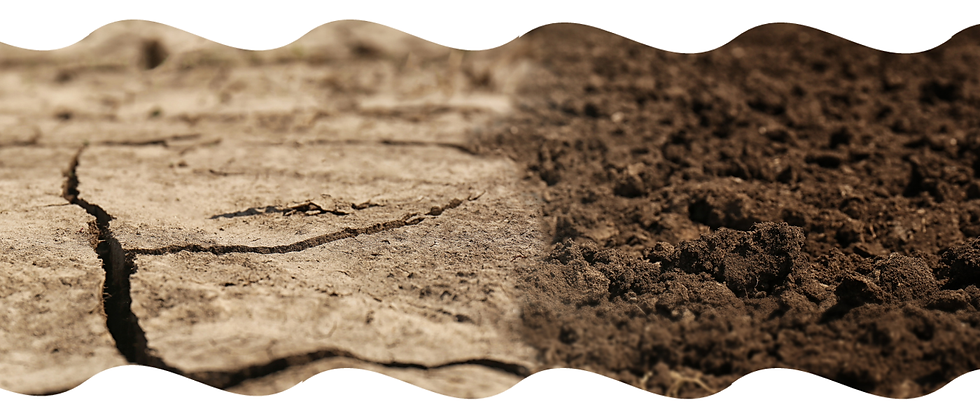
The importance of soil goes far beyond what we see on the surface. Healthy soil plays a fundamental role in regulating water cycles and is a living system that stores water and nutrients essential for food production, as well as hosting a great diversity of organisms.
When soil is degraded or loses its capacity to perform these functions, the benefits and opportunities it provides for the well-being of people and ecosystems also decline.
"Healthy soil is key to water security.
When we talk about soil, we talk about water. These two resources are closely linked, since healthy soil reduces erosion, absorbs rainwater better, retains moisture for longer, and allows water to recharge the aquifers. In contrast, when soil is degraded, whether by erosion, burning, or loss of organic matter, rain becomes a risk rather than a usable resource." See the blog post "The Soil That Sustains Us All"
Let's Talk About Erosion
Erosion is a natural process by which soil particles are detached and transported by natural agents such as water or wind. When this process occurs, the fertile top layer of the soil is gradually lost, reducing its capacity to sustain vegetation, store nutrients, and retain water. As a result, the productivity of ecosystems declines and their vulnerability to degradation increases.
There are several types of erosion
Wind erosion: occurs when wind carries away the surface particles of the soil, mainly in arid or semi-arid areas or areas with little plant cover. This phenomenon contributes to the loss of fertile soil, reduces the productivity of the land, and accelerates environmental degradation processes.
Water erosion: caused by the action of rainwater on the soil surface, and it can occur in different forms:
Splash erosion: occurs when raindrops strike the soil, detaching particles and altering the structure of the surface layer.
Sheet erosion: occurs when water flows over the surface, uniformly carrying away a thin layer of soil along with nutrients and organic matter essential for its fertility.
Rill erosion: happens when water concentrates and flows through channels formed on the land, especially on sloping ground, increasing soil loss.
Gully erosion: represents a more advanced stage of erosion, in which the rills progressively deepen and widen, changing the shape of the land. This process favors the loss of fertile soil and reduces water infiltration capacity, limiting the natural recharge of aquifers.
Gravitational erosion: occurs when large masses of earth move under the force of gravity, due to a lack of plant matter.

Anthropogenic erosion: caused directly by human activities such as deforestation, grazing, monoculture, the burning of crop residue, and other unsustainable agricultural practices.
Firm Waters contributes to Soil Regeneration
Since 2021, the Aguas Firmes project, an initiative of Grupo Modelo, the Mexican Coca-Cola Industry, and the German Technical Cooperation (GIZ), has promoted actions aimed at strengthening sustainable water management and soil health. Through collaboration among communities, farmers, government, and the private sector, the project promotes interventions that help reduce soil erosion, improve water infiltration, and recover functions that keep ecosystems in balance.
These actions include:
Nature-based Solutions that contribute to restoring ecosystems, retaining soil, and slowing runoff, and that favor infiltration. Some examples of Nature-based Solutions are gabion dams, reforestation, stone barriers, live barriers, gully head control, and log check dams, among others.
Sustainable agriculture practices that not only meet the growing demand for food, but also protect the soil's nutrients and structure. Some examples of sustainable agriculture are crop diversification, minimum tillage, permanent soil cover, the use of biofertilizers, pheromone-based pest control, and service crops, among others.
Modernization of irrigation systems, such as drip irrigation, which optimizes the use of water.

Governance and collaboration spaces that strengthen community participation in land management.
These actions help address today's challenges, related not only to water availability, but also to soil conservation and sustainable land management, ensuring that their benefits are sustained over time.
The fight against desertification and drought requires comprehensive solutions that bring together the efforts of different actors to conserve natural resources, strengthen the resilience of communities, and provide sustainable water management.
At Aguas Firmes we are convinced that the well-being of territories begins with the soil. Every action that helps reduce erosion, favor water infiltration, and strengthen ecosystems represents an opportunity to build a future with greater water security, environmental resilience, and well-being for present and future generations.
When we care for the soil, we also care for water
Tags: water



Join us
Let’s build together a
future with water, a,
future with life.