Un proyecto de


A project of



Our Community


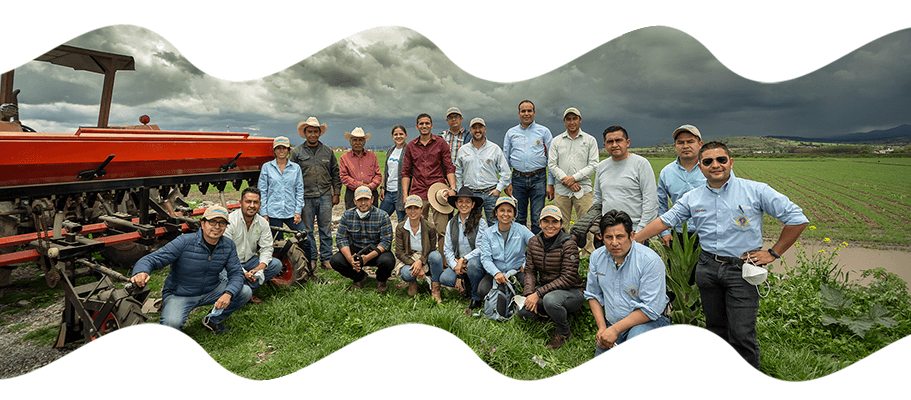
February 22nd, Agricultural Engineer's Day
Science and Heart at the Service of All
What is agronomy?
It is a body of knowledge related, among other things, to the cultivation of the land, based on technical and scientific principles, with the aim of obtaining the best food and raw materials for human beings.
Agronomy studies not only the physical, chemical, and biological factors of the land, but also the environmental, economic, and social factors that influence its productive process.
Its aim is none other than to improve production levels in order to guarantee food and raise the standard of living of a population that grows larger every day.
Knowledge of agronomy is of the utmost importance for countries like ours, where agriculture is one of the main economic activities.
Background in Mexico.
In Mexico, the National School of Agriculture was founded on February 22, 1854, in the former Convent of San Jacinto in Mexico City. It would later move to the Hacienda de Chapingo, and it was not until 1974 that the law creating the Universidad Autónoma Chapingo was enacted. Today, with an enrollment of almost 11,000 students, it is one of the most prestigious and nationally recognized institutions dedicated to agricultural education.
This laid the foundations for other schools and universities teaching agronomy as an applied science throughout the country.
The list of agronomic specialties is very long. To mention just a few:
Agricultural technology
Hydrology
Plant pathology
Agricultural economics
Plant breeding
Agricultural biotechnology
Horticulture
Rural sociology, and the list keeps growing.
But what does an agronomist do?
As a professional with multidisciplinary training, an agronomist is responsible for:

Analyzing and studying all the factors that influence the growth and development of the plants and animals used to feed the population.
Proposing solutions to problems such as pests, droughts, soil erosion, and low productivity, according to the conditions of the environment.
Generating new knowledge to create technological and sustainable innovations in agriculture.
Today, agronomy has gained the relevance needed to build a new, sustainable future. The participation of specialists in the field is becoming increasingly indispensable, and enrollment in these disciplines has grown by 58% over the last 15 years, according to data from the Universidad Autónoma Chapingo.
For Aguas Firmes, a project of Grupo Modelo and the German Cooperation for Sustainable Development – GIZ, the collaboration of agricultural engineers has been very important. They have shared with us their knowledge of new sustainable farming techniques such as conservation agriculture and have shown us the benefits of modernizing irrigation systems, which benefit not only the land and the production of more and better food, but also contribute to the care of the water resources of the aquifers of Calera, Zacatecas, and Apan, Hidalgo.
Today at Aguas Firmes we recognize and value this important work that all agronomists carry out with passion and social commitment, putting science and heart at the service of all.

Tags: agronomy



Join us
Let’s build together a
future with water, a,
future with life.